What Is Doraji? The Korean Bellflower Root Behind Our Name
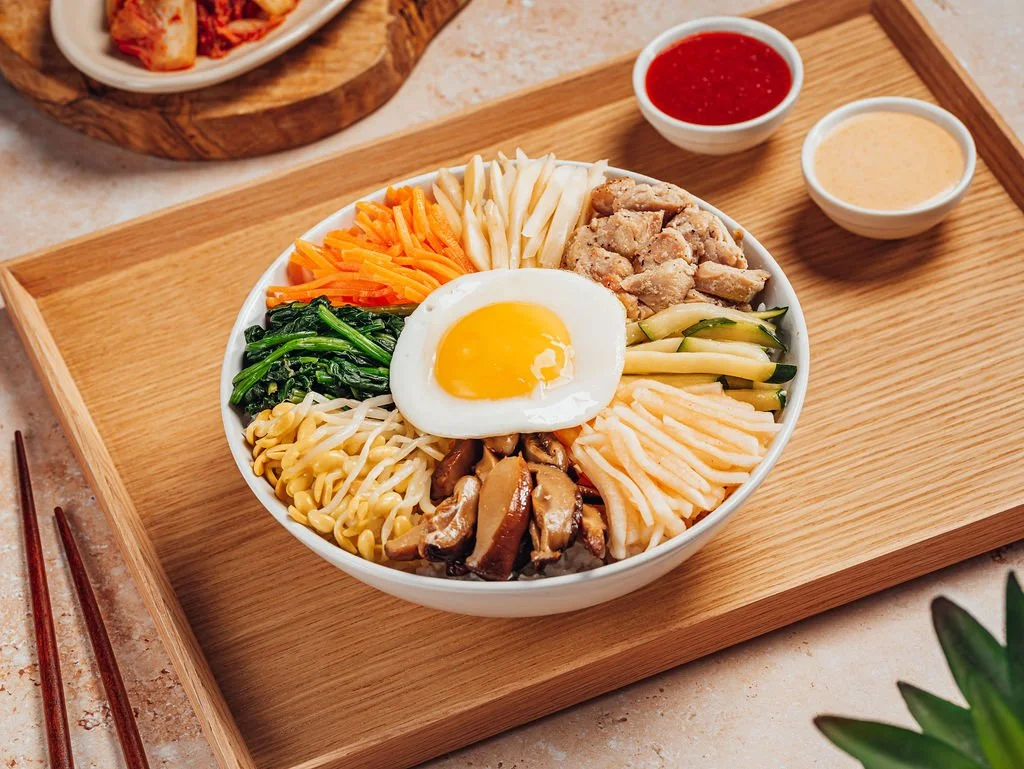
People ask us all the time: what does "Doraji" mean? It's the Korean word for bellflower root, a crunchy, slightly bitter vegetable that's been part of Korean cooking for generations, and it's in every bibimbap we make.
Try it in a bibimbap See the menu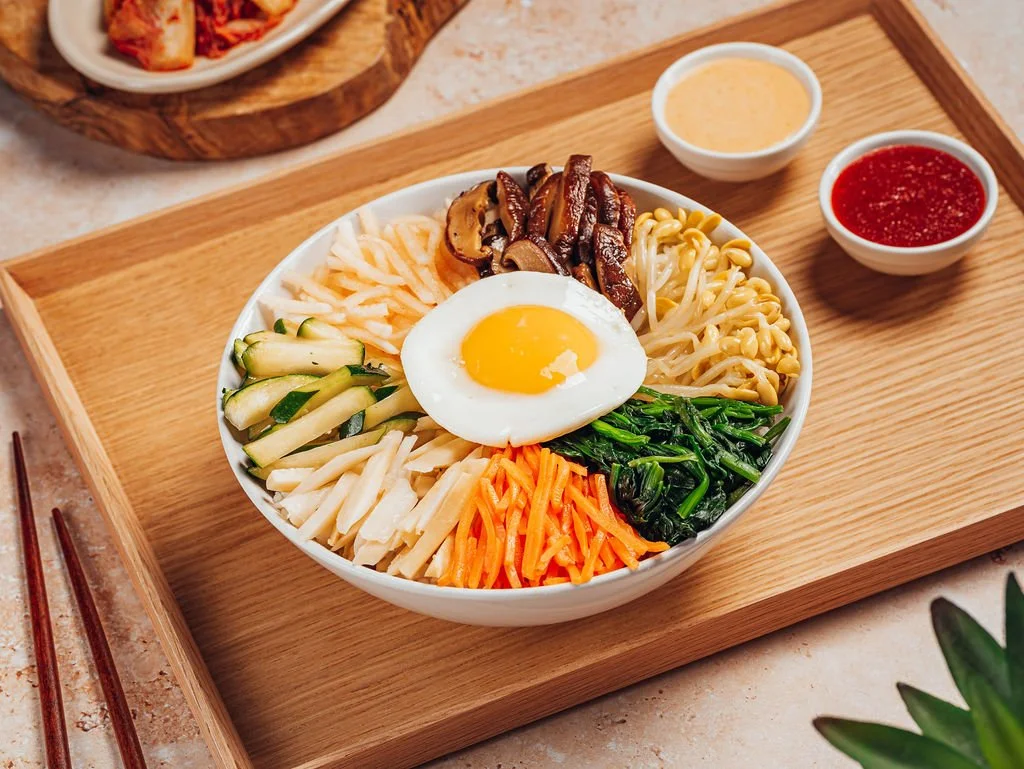
Korean bellflower root
bellflower root
bibimbap, doraji included
is named after
What is doraji?
Doraji (도라지) is the root of the bellflower plant, known in English as balloon flower or Korean bellflower (botanical name Platycodon grandiflorus). The plant has star-shaped purple or white flowers whose buds puff up like little balloons before they open. In Korea, though, it's the long, pale root that matters most, and it's eaten as a vegetable.
Taste
Savoury, earthy and slightly bitter. Seasoning softens the bitterness into a pleasant bite.
Texture
Firm and crunchy, a little like burdock root. It holds its crunch even after seasoning.
Looks
Pale, thin strips once peeled and julienned, easy to confuse with radish strips at first glance.
Where you'll find it
Bibimbap, seasoned side dishes (namul), and traditional teas and syrups.
How Koreans eat doraji
Doraji shows up across Korean home cooking. The root is peeled, cut into thin strips and often rubbed with salt to tame the bitterness before it's cooked or seasoned. A few classic ways to eat it:
- In bibimbap: one of the traditional vegetables arranged over the rice, adding crunch and a gently bitter contrast to the sweeter toppings.
- Doraji namul: a simple side dish of doraji sautéed or blanched and seasoned with sesame oil and salt, often made for holidays.
- Doraji muchim: raw doraji tossed in a spicy, tangy chili dressing.
- Teas and syrups: doraji is also a traditional ingredient in Korean teas and honey syrups.
Doraji is so familiar in Korea that it has its own folk song, Doraji Taryeong, about gathering bellflower roots in the mountains, one of the best-known Korean folk songs.
Why we named our restaurant Doraji
It's in every bowl
Doraji is a key ingredient in our bibimbap, seasoned simply with vegetable oil, sesame oil, salt and pepper.
It matters in Korean food
We wanted a name rooted in Korean cooking and culture, and doraji is a classic.
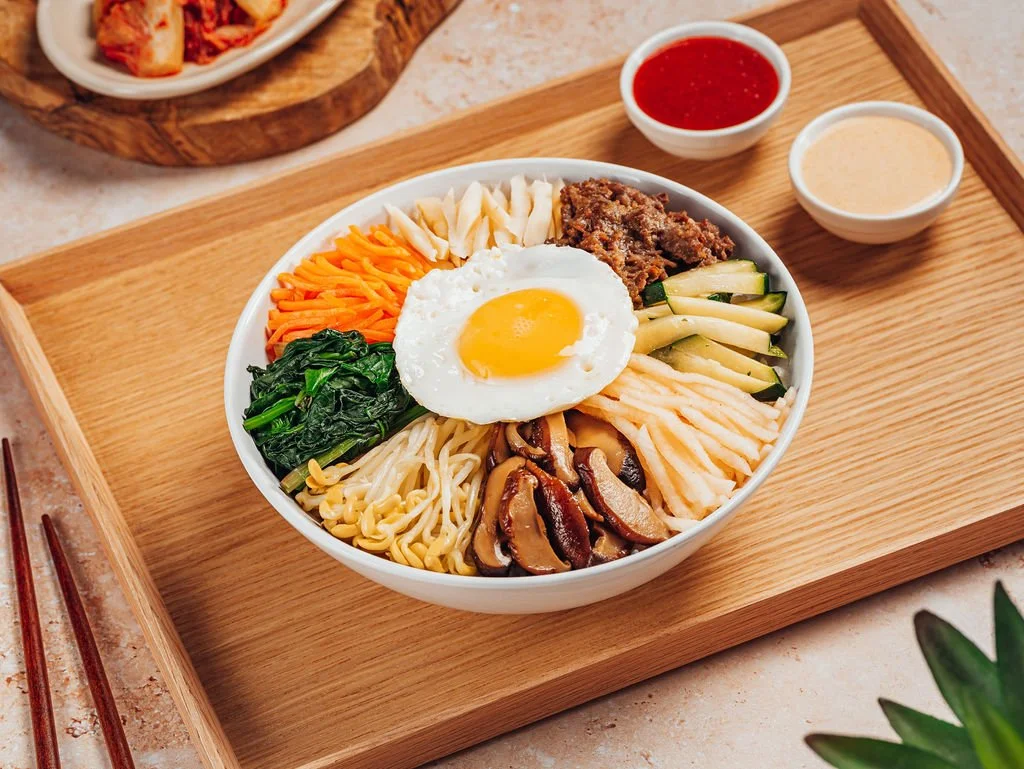
It looks like our bibimbap
A circle of colourful toppings around a bright centre: our bowls look a lot like the bellflower.
Where to try doraji in Toronto
The easiest way is in a bowl of bibimbap. Every bibimbap at Doraji comes with seven seasoned vegetables (bean sprouts, spinach, doraji, shiitake mushrooms, carrots, pickled radish and zucchini), your choice of protein (or all-vegetable), a fried egg and our house-made gochujang on the side. Not sure where to start? Read Bibimbap vs Dupbap: What's the Difference?
Eating plant-based or gluten-free? Our Vegetarian Bibimbap is vegetarian, can be made vegan without the egg, and is gluten-free friendly on rice or quinoa without gochujang. See our dietary guide for details.
FAQFrequently asked questions
What is doraji?
Doraji (도라지) is the root of the bellflower plant, also called balloon flower (Platycodon grandiflorus). In Korean cooking it's a vegetable: savoury, slightly bitter, with a satisfying crunch.
What does doraji taste like?
Fresh doraji is mildly bitter and earthy with a firm, crunchy texture, a little like a cross between burdock root and ginseng. Once it's seasoned, the bitterness softens into a pleasant savoury bite.
Is doraji in bibimbap?
Yes. Doraji is one of the classic bibimbap vegetables, and it's one of the seven seasoned vegetables in every bibimbap we make.
Why is the restaurant called Doraji?
We named our restaurant after doraji because of its importance in Korean cuisine, and because our bibimbap, with its circle of colourful toppings, looks a lot like the flower.
Where can I try doraji in Toronto?
In every bibimbap at Doraji, at Wellington Market in The Well, 486 Front Street West. You can also order online for pickup or book us for catering.
Come taste the namesake.
Find us at Wellington Market in The Well, 486 Front Street West, Toronto, or order online for pickup.
Order online Our story