Bibimbap vs Dupbap: What's the Difference?
The question we hear most at our counter is some version of "What's the difference between bibimbap and dupbap?" Fair enough. Both are Korean rice bowls, both start with rice, and both come with a protein. But they're built differently, they eat differently, and most people end up with a clear favourite.
Order online See the menu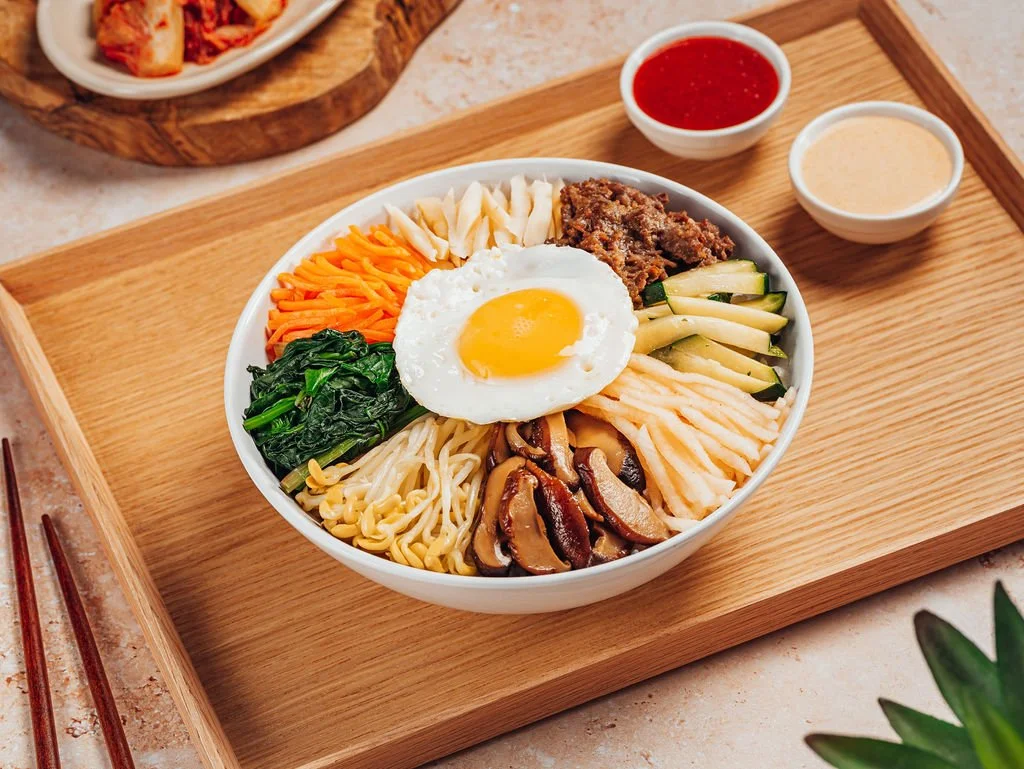
"Mixed rice" vs "over rice."
in every bibimbap
every classic dupbap
rice, quinoa or glass noodles
Mixed rice vs over rice
- Bibimbap is a mixed rice bowl: rice topped with seasoned vegetables, a protein and a fried egg, then mixed with gochujang before eating.
- Dupbap is an "over rice" bowl: a savoury protein served over rice with Korean side dishes, eaten as is.
Want balanced and veggie-forward? Go bibimbap. Want hearty and savoury? Go dupbap.

What the names mean
In Korean, bap (밥) means rice, so both names tell you what kind of rice bowl you're getting.
Bibimbap (비빔밥) comes from bibim, "mixing." The name is the instruction: you mix it.
Dupbap (덮밥, also spelled deopbap) comes from deop, "to cover." It's rice covered with toppings, the way you'd describe any "over rice" dish.
What is bibimbap?
Bibimbap is one of the best-known dishes in Korean cuisine. In Korea it's also served in a sizzling stone bowl (dolsot bibimbap), but the heart of the dish is the same everywhere: rice, lots of vegetables and a spicy-sweet sauce, mixed together.
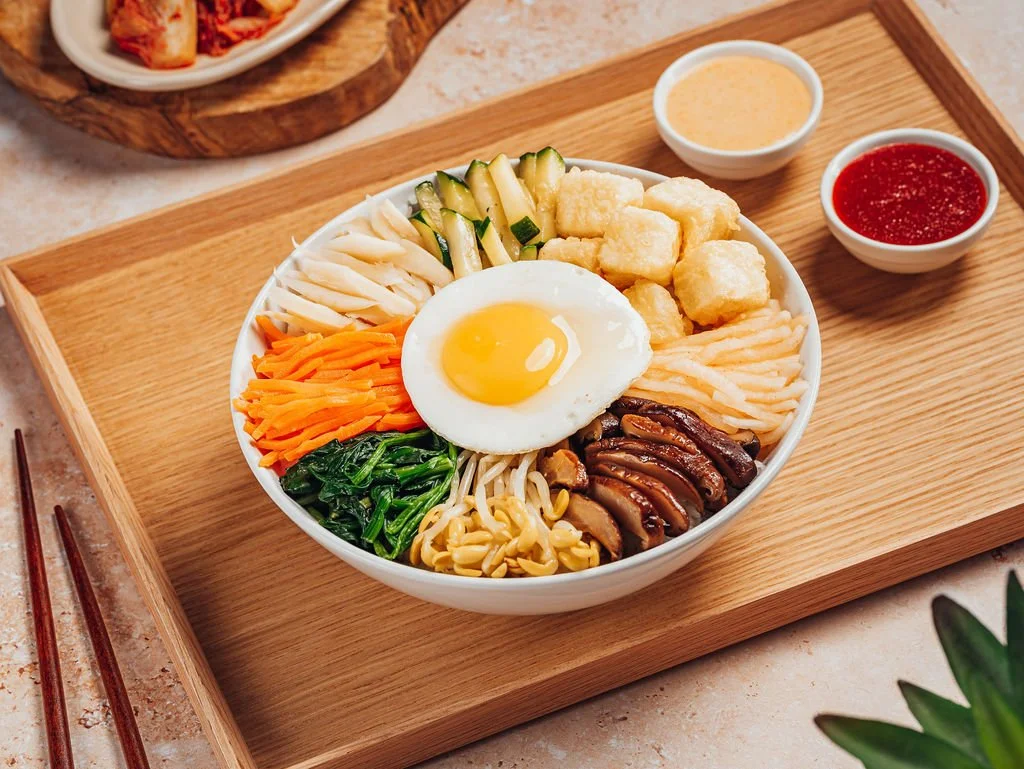
Bibimbap ingredients at Doraji
- Seven seasoned vegetables: bean sprouts, spinach, doraji (bellflower root), shiitake mushrooms, carrots, pickled radish and zucchini, seasoned simply with vegetable oil, sesame oil, salt and pepper
- Your choice of protein: bulgogi beef (marinated ribeye), chicken thigh, spicy pork, fried soft tofu, or vegetarian
- A fried egg on top
- Our house-made gochujang sauce on the side, plus up to one more sauce of your choice on top
The doraji in every bowl is where our name comes from. It's bellflower root: savoury, slightly bitter, with a great crunch, and a classic bibimbap ingredient.
Is bibimbap healthy?
It's one of the more balanced meals you can grab for lunch: seven vegetables, a protein and rice, all in one bowl. Our vegetables are seasoned simply, with vegetable oil, sesame oil, salt and pepper. If you want a lighter bowl, choose purple rice or quinoa as your base and go easy on the creamier sauces.
How to eat bibimbap
Sauce
Add as much gochujang as you like. It's medium heat and comes on the side.
Break the egg
Let the yolk run into the rice. That's part of the fun.
Mix
Don't eat it in layers. Mix until every bite has rice, vegetables, protein and sauce.
Enjoy
That's it. Bibim means "mixing," after all.
What is dupbap?
Dupbap is built for people who want the protein to be the star. Instead of a big spread of vegetables, it's a generous portion of savoury protein over rice, with three Korean side dishes alongside.
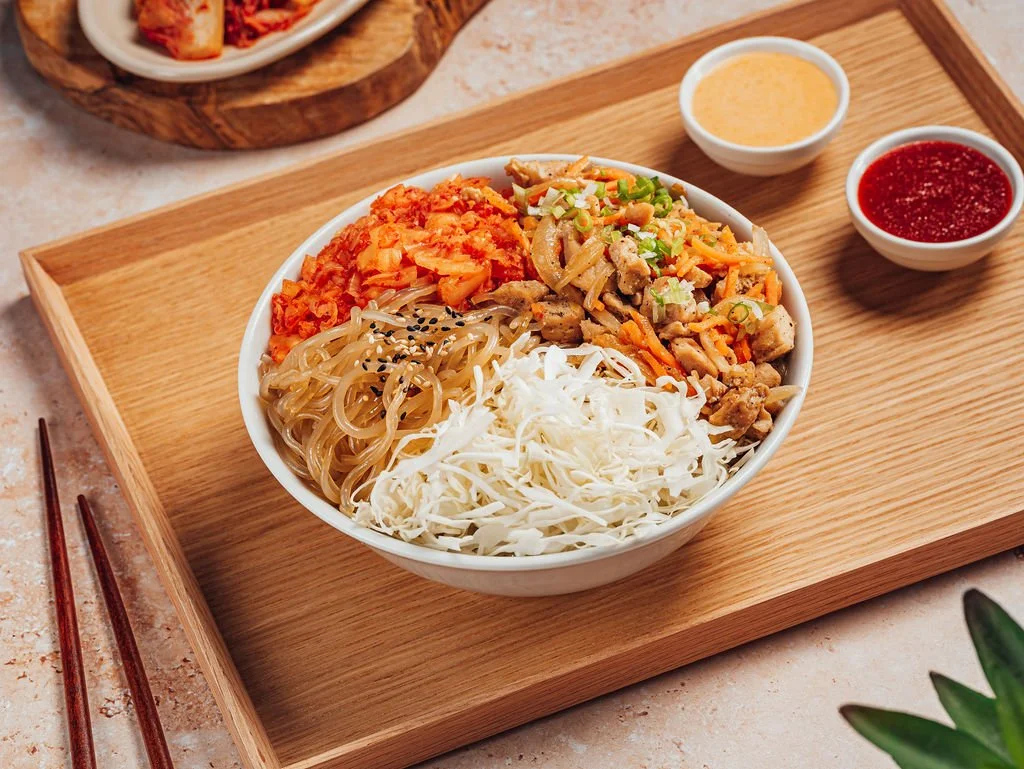
- Your choice of protein: bulgogi beef, soy sauce chicken, spicy pork or fried soft tofu, each cooked with sautéed onions and carrots
- Three side dishes: japchae (stir-fried glass noodles), pan-fried kimchi and shredded cabbage
- Up to two sauces on top
For something spicier, our Spicy Squid Dupbap is grilled calamari sautéed in Korean red chili sauce with green onions, carrots, onions and cabbage, served over rice. You don't need to mix dupbap: eat the protein, rice and sides together however you like.
Side by sideBibimbap vs dupbap at a glance
| Bibimbap | Dupbap | |
|---|---|---|
| Name means | "Mixed rice" | "Over rice" |
| Focus | Vegetables plus protein | The protein |
| Vegetables | Seven seasoned vegetables | Onions and carrots with the protein, plus cabbage |
| Sides | None, it's all in the bowl | Japchae, pan-fried kimchi and cabbage |
| How to eat | Mix it well | Eat it as is |
| Feels like | Fresh and balanced | Hearty and savoury |
At Doraji, both come on your choice of white rice, purple rice (a Korean multigrain blend with black rice), quinoa or glass noodles.
ChooseWhich one should you order?
Order bibimbap if…
you want a bowl full of vegetables, you like a bit of heat from gochujang, or you want the most balanced meal on the menu.
Order dupbap if…
you're hungry, you love bulgogi or spicy pork, or you want the sides: japchae and pan-fried kimchi are a big part of the appeal.
Have dietary needs?
- Vegetarian: Vegetarian Bibimbap, Fried Tofu Bibimbap or Fried Tofu Dupbap. All of our sauces are vegetarian. The pan-fried kimchi in every dupbap is made with fish sauce, so ask us to swap it for a vegetable.
- Vegan: Vegetarian or Fried Tofu Bibimbap without the egg is the easiest choice. Pick a vegan sauce: Gochujang, Doraji Soy Sauce or Smoky BBQ.
- Gluten-free-friendly: Vegetarian or Chicken Bibimbap, or Fried Tofu Bibimbap made gluten-free on request, on rice, quinoa or glass noodles. Skip the gochujang and choose Miso Sesame Mayo or Doraji Signature. Dupbap isn't a good fit, because the japchae side isn't gluten-free.
- Nuts: none of our rice bowls contain peanuts or tree nuts, but we do use sesame seeds and sesame oil.
If you have celiac disease or a serious allergy, tell us when you order so we can go over the options with you.
FAQFrequently asked questions
What is dupbap?
Dupbap (덮밥, also spelled deopbap) means "over rice." It's a savoury protein served over rice. At Doraji it comes with japchae, pan-fried kimchi and shredded cabbage.
What is the difference between bibimbap and dupbap?
Bibimbap is a mixed rice bowl with seven seasoned vegetables, a protein, a fried egg and gochujang, all mixed together before eating. Dupbap puts the protein in the spotlight, served over rice with Korean side dishes, and you eat it as is.
Is bibimbap healthy?
It's one of the more balanced lunches you can grab: seven vegetables, a protein and rice in one bowl. For a lighter bowl, choose purple rice or quinoa and go easy on the creamier sauces.
Is bibimbap gluten-free?
At Doraji, Vegetarian and Chicken Bibimbap are gluten-free friendly, and Fried Tofu Bibimbap can be made gluten-free, on rice, quinoa or glass noodles. Skip the gochujang and choose Miso Sesame Mayo or Doraji Signature.
Try both.
Most of our regulars have a clear favourite, but plenty switch it up depending on the day. Find us at Wellington Market in The Well, 486 Front Street West.
Order online for pickup See the full menu